Finally!
I don't think it's going to hang around, though, unfortunately, but boy was it fun last night. I wasn't the only one, either - every other car I saw was going sideways, including one older E-class Mercedes round by the town hall, on the cobbles. The tracks on the road made it very clear that pretty much everyone was planting too much pedal!
Muchos excellentes ;-)
29/11/2011

27/11/2011





more A2 suspension stuff
A rewrite of a post talking about FSDs and suspension in general on the Audi A2, and an extension to the post here.
My FSDs are just over two years old and have rolled 30 thousand kms in that time. Bought via Larkspeed in the UK.
I'd argue that FSDs aren't stiff. Especially in combination with 15s. With 17s I found them fine, with light 15s and Eibachs fine. However, this was all with worn droplinks.
The car pitches and rolls to a certain extent and this was improved significantly by the swap to lighter summer wheels. I have a set of TD Pro Race 1s and another of Rial Milano. The Uniroyal summer 195/50R15s were originally on the Rials and then moved to the Pro Race 1s. Difference? Significant - and there are two changes there: the rials are 6,5x15, TDs 7x15; and the weight. The Rials probably weigh 1kg more per wheel (though I don't have accurate numbers).
First thing I'd do, though, based on my recent experience, is change the droplinks to Meyle HD ones. Don't go original, they won't last. I'm on my fourth set, though I do drive a *lot* of gravel. They will tighten the ride up massively on their own.
The Nokian Hakka 7 in 185/60R15 on the Rials I have on right now have bedded in - as have the droplinks - and things are now more jiggly than they ever were with the summer tyres. Remember, though, that an awful lot of that *might* be attributable to the tyres, as they're winter ones and therefore have different properties by definition. Still, I drove the car several times with the new winters on and without the droplink change and it's seriously better now. But it also reports far more accurately what's going on at the front wheels - when there's no grip, that is telescoped through the wheel in a way that I've not seen in a while.
I will probably also play with the tyre pressures. I think they're at 2.5/2.7 front / rear at 10C. I'll probably drop it to 2.1/2.3 and see if that also improves the ride, which I expect it will.
I have a very strong feeling that the ride in the summer will be awful and that the droplinks will have made the difference. Then we'll end up on Bilstein B6s. FSDs also seem to be inconsistent between batches, so if you want the deliberate sportiness, don't do it and go B6 instead. Why the ride will be bad? Simple. Without preloading (i.e. a full car) the FSDs don't damp enough. They're pretty good when it's warm, but when it's cold they're like toffee. So you get the pitch and roll and nod and squat all the time when it's between +0 and +10 or so. For me that's not *too* much of a problem as we tend to drive long distances fully loaded and the rest of the time it's cold anyway.
Testing different suspension setups is one way to go, but remember that any one of those is affected by the wear and tear on different components. I seem to tear through droplinks and other rubber bushes, mainly because of the kms I drive on gravel.
There are a bunch of parts which make a huge difference and most people ignore them.
- Gearbox mounts
- Engine mounts
- Dogbone
- Wishbone mount rubbers
- ARB
I'll go through why: the system is set up based on the "aggregatenträger" or subframe. The frame is bolted to the car with I think it's 8 bolts.
On the left and right of that frame is a "konsole" which has the rear section of the wishbone attached with a large bolt. This is buffered against NVH ("noise, vibration, harshness") with a large rubber mount. That rubber degrades over time. Repeat on both sides.
The ARB is bolted to the "konsoles". The early car bars are mounted with plastic sheathes. Underneath these, the bar corrodes, splits the collars and then starts moving. There are no limits on the bar - say, a 3mm thick "collar" around the bar, as on the later versions - to movement. The "collar" stops lateral movement, of course. My ARB was moved by Stealth a couple of years ago and I moved it again myself last week. I want a new one with collars or it'll move again. Jubilee clips will not hold it in place.
The rubber bushes alone aren't enough, but they also tighten up the ride if they're replaced. Left-right movement is not supposed to happen - that's supposed to be stopped by the ARB - so if it's not tight enough, you get roll.
The ARB is connected to the suspension strut with the droplink. These get an awful lot of work and I'll agree with an opinion expressed on the German forum that they're undersized. Meyle now do HD ones - MAKE SURE YOU HAVE THE PERFECT TOOL TO BOLT THEM IN! The originals were relatively simple to bolt in but the meyle ones have a deliberately mis-sized nut (or Nyloc, I'm not sure and I haven't taken the others apart to see) so you absolutely must have something to turn the thread while you use a 16mm spanner to hold the nut. If it's even remotely the wrong size, you will break the rear section of the nut, meaning you need to get the flex out to remove it and replace it. I had to flex one of my old ones off and that's the first time that's been necessary.
The rear section of the subframe is connected to the gearbox with the dogbone. This also makes a signficant difference in NVH but less in handling.
Major other sources of NVH are worn engine mounts. The bolts *can* shear, so I'd suggest changing them if you're doing everything else, because you'll increase wear on the old parts.
The bottom of the suspension strut joins to the wishbone with a balljoint. On early cars - up to 2003 - the wishbone is cast iron and the ball is non-replaceable. The later cars have replaceable ones and wishbones made of steel pressings. So you can't replace this without the entire wishbone. If you're going to do both rubber mounts, then you could argue this would be a good idea.
The main thing, though, is that the car is essentially completely imbalanced. 75/25 front rear is slightly OTT but not very far off. This also means that any change you make at the front is disproportionately effective but also that most of the wear is at the front.
My FSDs are just over two years old and have rolled 30 thousand kms in that time. Bought via Larkspeed in the UK.
I'd argue that FSDs aren't stiff. Especially in combination with 15s. With 17s I found them fine, with light 15s and Eibachs fine. However, this was all with worn droplinks.
The car pitches and rolls to a certain extent and this was improved significantly by the swap to lighter summer wheels. I have a set of TD Pro Race 1s and another of Rial Milano. The Uniroyal summer 195/50R15s were originally on the Rials and then moved to the Pro Race 1s. Difference? Significant - and there are two changes there: the rials are 6,5x15, TDs 7x15; and the weight. The Rials probably weigh 1kg more per wheel (though I don't have accurate numbers).
First thing I'd do, though, based on my recent experience, is change the droplinks to Meyle HD ones. Don't go original, they won't last. I'm on my fourth set, though I do drive a *lot* of gravel. They will tighten the ride up massively on their own.
The Nokian Hakka 7 in 185/60R15 on the Rials I have on right now have bedded in - as have the droplinks - and things are now more jiggly than they ever were with the summer tyres. Remember, though, that an awful lot of that *might* be attributable to the tyres, as they're winter ones and therefore have different properties by definition. Still, I drove the car several times with the new winters on and without the droplink change and it's seriously better now. But it also reports far more accurately what's going on at the front wheels - when there's no grip, that is telescoped through the wheel in a way that I've not seen in a while.
I will probably also play with the tyre pressures. I think they're at 2.5/2.7 front / rear at 10C. I'll probably drop it to 2.1/2.3 and see if that also improves the ride, which I expect it will.
I have a very strong feeling that the ride in the summer will be awful and that the droplinks will have made the difference. Then we'll end up on Bilstein B6s. FSDs also seem to be inconsistent between batches, so if you want the deliberate sportiness, don't do it and go B6 instead. Why the ride will be bad? Simple. Without preloading (i.e. a full car) the FSDs don't damp enough. They're pretty good when it's warm, but when it's cold they're like toffee. So you get the pitch and roll and nod and squat all the time when it's between +0 and +10 or so. For me that's not *too* much of a problem as we tend to drive long distances fully loaded and the rest of the time it's cold anyway.
Testing different suspension setups is one way to go, but remember that any one of those is affected by the wear and tear on different components. I seem to tear through droplinks and other rubber bushes, mainly because of the kms I drive on gravel.
There are a bunch of parts which make a huge difference and most people ignore them.
- Gearbox mounts
- Engine mounts
- Dogbone
- Wishbone mount rubbers
- ARB
I'll go through why: the system is set up based on the "aggregatenträger" or subframe. The frame is bolted to the car with I think it's 8 bolts.
On the left and right of that frame is a "konsole" which has the rear section of the wishbone attached with a large bolt. This is buffered against NVH ("noise, vibration, harshness") with a large rubber mount. That rubber degrades over time. Repeat on both sides.
The ARB is bolted to the "konsoles". The early car bars are mounted with plastic sheathes. Underneath these, the bar corrodes, splits the collars and then starts moving. There are no limits on the bar - say, a 3mm thick "collar" around the bar, as on the later versions - to movement. The "collar" stops lateral movement, of course. My ARB was moved by Stealth a couple of years ago and I moved it again myself last week. I want a new one with collars or it'll move again. Jubilee clips will not hold it in place.
The rubber bushes alone aren't enough, but they also tighten up the ride if they're replaced. Left-right movement is not supposed to happen - that's supposed to be stopped by the ARB - so if it's not tight enough, you get roll.
The ARB is connected to the suspension strut with the droplink. These get an awful lot of work and I'll agree with an opinion expressed on the German forum that they're undersized. Meyle now do HD ones - MAKE SURE YOU HAVE THE PERFECT TOOL TO BOLT THEM IN! The originals were relatively simple to bolt in but the meyle ones have a deliberately mis-sized nut (or Nyloc, I'm not sure and I haven't taken the others apart to see) so you absolutely must have something to turn the thread while you use a 16mm spanner to hold the nut. If it's even remotely the wrong size, you will break the rear section of the nut, meaning you need to get the flex out to remove it and replace it. I had to flex one of my old ones off and that's the first time that's been necessary.
The rear section of the subframe is connected to the gearbox with the dogbone. This also makes a signficant difference in NVH but less in handling.
Major other sources of NVH are worn engine mounts. The bolts *can* shear, so I'd suggest changing them if you're doing everything else, because you'll increase wear on the old parts.
The bottom of the suspension strut joins to the wishbone with a balljoint. On early cars - up to 2003 - the wishbone is cast iron and the ball is non-replaceable. The later cars have replaceable ones and wishbones made of steel pressings. So you can't replace this without the entire wishbone. If you're going to do both rubber mounts, then you could argue this would be a good idea.
The main thing, though, is that the car is essentially completely imbalanced. 75/25 front rear is slightly OTT but not very far off. This also means that any change you make at the front is disproportionately effective but also that most of the wear is at the front.
23/11/2011
3ware 9650 red LED
go on, google will find it.
There isn't much on the web about this. One thing that has just occurred to me - I go the little blinking red LED on Saturday and figured the card was dead. One thing I haven't tried / checked is that the cache memory had been swapped out earlier. Since someone claimed this might be to do with the BBU, I figure it might also be to do with the cache... I'll take it out and test, but not right now.
PCI-X is supposed to be an extension of PCI, right? Well, I haven't managed to get the card to be accessed reliably in only a PCI slot. PCI-X is fine (if it's screwed down and only then) but PCI seems extremely unreliable.
Several different boards tested, all with similar results. 1TB and 1.5TB disks, Samsung, WD. Always the same - either they don't get identified every time or the don't get identified at all (the P5QL doesn't see anything, the P4SCI always sees them, the D945GCLF2 occasionally and the D510MO until they're in the same case). Go figure.
I think I'm going to be looking for a NF99-525 from Jetway with the extra ports on very, very soon.
- Bret
There isn't much on the web about this. One thing that has just occurred to me - I go the little blinking red LED on Saturday and figured the card was dead. One thing I haven't tried / checked is that the cache memory had been swapped out earlier. Since someone claimed this might be to do with the BBU, I figure it might also be to do with the cache... I'll take it out and test, but not right now.
PCI-X is supposed to be an extension of PCI, right? Well, I haven't managed to get the card to be accessed reliably in only a PCI slot. PCI-X is fine (if it's screwed down and only then) but PCI seems extremely unreliable.
Several different boards tested, all with similar results. 1TB and 1.5TB disks, Samsung, WD. Always the same - either they don't get identified every time or the don't get identified at all (the P5QL doesn't see anything, the P4SCI always sees them, the D945GCLF2 occasionally and the D510MO until they're in the same case). Go figure.
I think I'm going to be looking for a NF99-525 from Jetway with the extra ports on very, very soon.
- Bret
22/11/2011
"Don't tell anyone this, but it's..."
I heard this, this morning, followed by an explicit set of instructions how to spell the password in question. I'd got the username as well.
Couple of thoughts:
- You should not need to give users an admin password EVER. Give them an admin account local to the machine and then they are responsible for it.
- Don't assume that just because you're in a different country, someone won't understand your language.
- Admin passwords should not be simple enough to explain in terms of words (the password in question was laughably weak).
- If you need to administer lots of passwords, then use a password tool. Examples include password safe or keepass, both of which are cross-platform. Choose a decent passphrase!
- Bret
Couple of thoughts:
- You should not need to give users an admin password EVER. Give them an admin account local to the machine and then they are responsible for it.
- Don't assume that just because you're in a different country, someone won't understand your language.
- Admin passwords should not be simple enough to explain in terms of words (the password in question was laughably weak).
- If you need to administer lots of passwords, then use a password tool. Examples include password safe or keepass, both of which are cross-platform. Choose a decent passphrase!
- Bret
21/11/2011
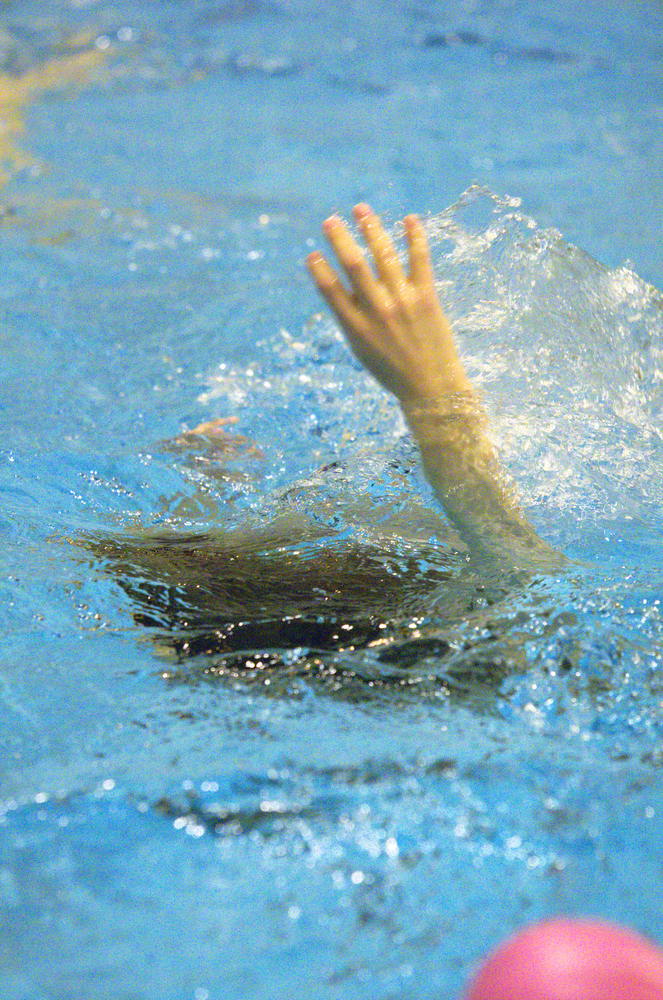
the swimming pool
This was harder than I thought, and teh ISO levels are plain silly (ISO 4-8000) to get f5 and 1/500.
Anyway. Here a couple which I like despite / because of the noise...


- Bret
Anyway. Here a couple which I like despite / because of the noise...


- Bret
20/11/2011
server now sort-of running...
but without the RAID card - it appears to have died on me, which is a real pain. In the mean time I have 6 ports on the board, so I'll be using those.
I've hung three of the drives á la "Silentpcreview" in 5.25" slots with elastic. I am astounded by how much quieter they are.
Let's leave it at "those disks are the only ones in the server for the time being" and it's still louder than I'd like, though significantly more tolerable than it was.
Next up is to get some more memory and maybe a new case. Partitioning is causing a headache, too, as I could create a nice fast draft partition.... but since I've tended to work without too many backups, that would be a nightmare. So maybe slightly slower IO performance will still be acceptable. I'll have to test.
That's really the next set of steps: get the machine so far that I can put it where it's supposed to be going and let it run for a while.
- Bret
I've hung three of the drives á la "Silentpcreview" in 5.25" slots with elastic. I am astounded by how much quieter they are.
Let's leave it at "those disks are the only ones in the server for the time being" and it's still louder than I'd like, though significantly more tolerable than it was.
Next up is to get some more memory and maybe a new case. Partitioning is causing a headache, too, as I could create a nice fast draft partition.... but since I've tended to work without too many backups, that would be a nightmare. So maybe slightly slower IO performance will still be acceptable. I'll have to test.
That's really the next set of steps: get the machine so far that I can put it where it's supposed to be going and let it run for a while.
- Bret
Subscribe to:
Posts (Atom)